
Plan for $200 to $3,000: Cover Up Tattoo Costs and Consultation Checklist
Most cover-up tattoos run between $200 and $3,000, with small fixes landing near the bottom and large, dark, or highly detailed pieces pushing well past $2,000. The single biggest swing factor is how dark and dense your existing tattoo is, since heavy old ink forces a bigger, bolder new design. Your best next step is sending clear photos to an artist for a real quote, not guessing from a chart.
TL;DR:
Cover-up tattoo prices depend heavily on the old ink’s darkness and density, with dark, dense tattoos requiring larger, bolder designs that cost more.
Small cover-ups cost roughly $200 to $600, medium-sized pieces range from $600 to $2,000, and large or detailed work can exceed $6,000, especially when special skills are needed.
The cost varies based on design complexity, skin condition, placement, and artist expertise, with specialists charging a premium for camouflage and contrast techniques.
Laser removal and hybrid fading options cost more and take longer, but they may provide more design flexibility over dark or dense tattoos.
An accurate quote requires clear photos, details about laser history, and a consultation to determine if laser fading or direct cover-up is suitable.
Table of Contents
How Much Does a Cover-Up Tattoo Cost by Size?
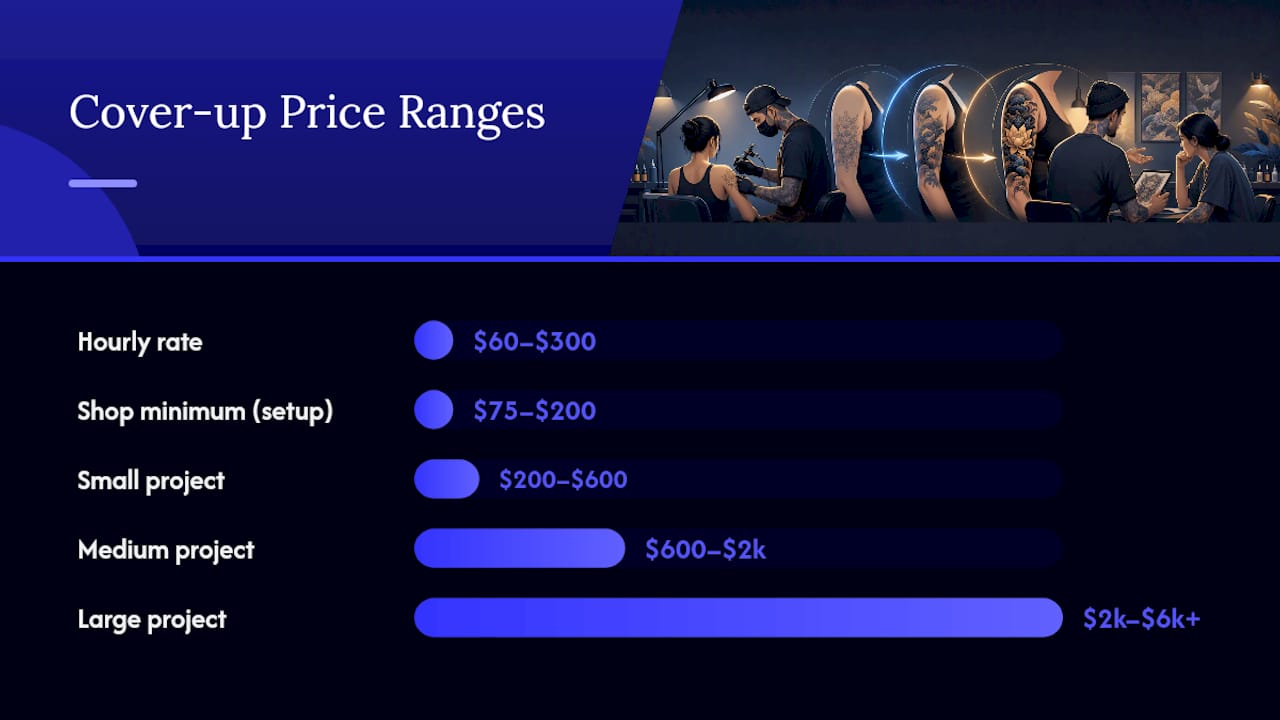
Artists price cover-ups the same way they price most custom work: by the hour, by a flat session rate, or by a project quote that bundles several sessions together. Hourly rates typically run $60 to $300, and most studios also charge a shop minimum, usually $75 to $200, that covers setup and materials even for a quick fix. That minimum matters more than people expect. A tiny cover-up might technically take 20 minutes of needle time, but you’ll still pay the full minimum because the artist has to mix custom ink, redraw the design, and prep the station regardless of size.
Total project cost depends on hours worked, not just size on paper. A dense old tattoo in a small area can take longer to cover than a faded, larger one, which is why quotes vary so much even for similarly sized pieces.
Here’s how that typically breaks down by project scope, based on industry cost guides:
Small cover-ups (a name, a small symbol, a wrist piece): roughly $200 to $600, often finished in one or two sessions.
Medium cover-ups (a forearm piece, a mid-size back or shoulder design): roughly $600 to $2,000, usually spread across two to four sessions.
Large cover-ups (a full sleeve, a back piece, anything replacing extensive old work): $2,000 to $6,000 or more, frequently requiring five or more sessions.
Premium or specialist work (color realism over dark ink, large-scale custom pieces): can exceed $6,000 when the design demands an artist with a specific, in-demand skill set.
Deposits are commonly requested and usually applied toward the final session’s cost. Refund policies vary, so it’s important to clarify this with your studio beforehand.
What Factors Actually Drive Cover-Up Tattoo Prices?
Two people can walk in with tattoos the same size and walk out with wildly different quotes. The reason almost always comes down to a handful of variables that experienced artists evaluate before they say a number out loud.
Darkness and density of the old ink. Heavy black or dark blue ink absorbs light and limits what colors will show through it. Covering it often requires a bigger, bolder new design just to create enough visual weight to hide the old lines, which adds hours.
Size and complexity of the new design. A simple blackwork pattern takes less time than a detailed color-realism piece, even over identical old ink.
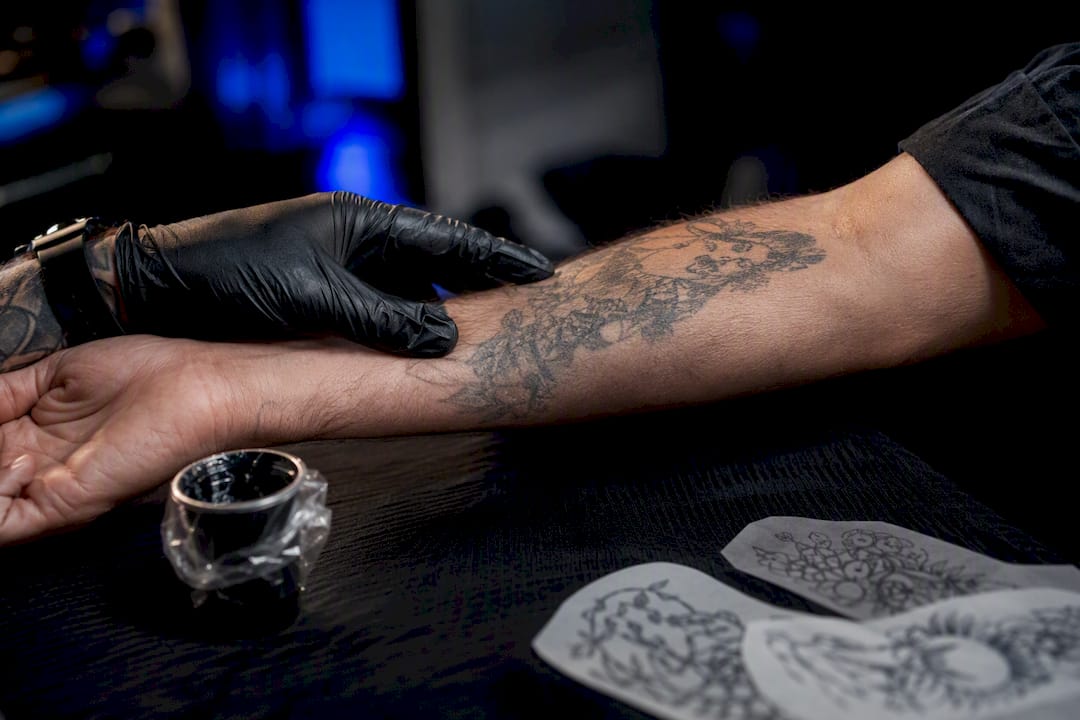
Skin condition and placement. Scar tissue from old tattoo removal attempts or the tattoo’s original application can hold ink differently, and curved areas like elbows or ribs slow the work down compared to flat areas like the outer arm.
Artist skill level and cover-up specialization. Not every talented tattoo artist is good at cover-ups specifically. It’s a distinct skill that involves camouflage, contrast, and design tricks that regular custom work doesn’t require, and specialists typically charge a premium for that expertise.
Technique and number of sessions. Blackwork tends to be faster and cheaper to execute than color realism over dark ink, and each additional session adds another hourly block or session fee to the total.
Cover-ups also just cost more than a comparable fresh tattoo on clean skin, because the artist is solving a puzzle, not starting from a blank canvas. That planning time gets billed too.
Pro Tip: Ask your artist directly whether your old tattoo will require a design change to cover successfully. If they say “we can put anything you want over it,” that’s often a red flag. A cover-up specialist will tell you honestly when your dream design won’t hide the old ink well.
Cover-Up vs. Laser Removal vs. Hybrid Fade: Which Costs Less?
The three paths to erasing an old tattoo cost very differently, and the right choice depends on your budget, your timeline, and what you actually want the end result to look like.
Direct cover-up: Typically $200 to $1,000 for straightforward jobs, finished in weeks rather than years. This is the fastest and usually the cheapest route, but it limits your design options if the old tattoo is dark or dense, according to comparative cost analysis.
Partial laser fading, then cover: Three to five laser sessions run roughly $500 to $3,000 combined with the cover-up itself, spread over several months since skin needs weeks to heal between laser treatments. This hybrid approach lightens the old ink enough that you get more freedom with color and detail in the new piece.
Full laser removal: Often $900 to $5,000 or more, and it can take one to two years of repeated sessions to fully clear old ink. This makes sense if you want the skin completely blank, but it’s the slowest and often the most expensive option overall.
If your old tattoo is dense but you’re set on a design with real color work or fine detail, the hybrid path is usually the smarter money. It costs more upfront than a direct cover, but it buys design freedom that a straight cover-up over dark ink simply can’t offer.
What Happens During a Cover-Up: Sessions and Timeline
Planning time off work and healing windows matters as much as planning your budget, since cover-ups rarely happen in a single sitting.
Initial consultation and design work. Most studios review photos, discuss the old tattoo’s age and any prior laser attempts, and sketch a concept before booking the first session.
First session (2 to 6 hours). Small covers might finish here. Larger or darker pieces will need the outline and initial shading laid down, with color or detail work saved for later sessions.
Healing window (2 to 4 weeks between sessions). Skin needs to fully heal before more ink goes in, so multi-session cover-ups typically stretch across one to three months depending on size.
Follow-up sessions. Large or highly detailed projects can run five or more sessions, sometimes adding up to 20-plus hours of total needle time.
Touch-up appointment. Scheduled a few weeks after the final session once healing settles, this is when minor color or line fixes typically happen.
Budget for aftercare products, too. Healing balm and sun protection typically add another $20 to $100 over the healing period, a small line item people often forget to plan for.
How Do You Get an Accurate Cover-Up Tattoo Quote?
A quote based on a text description alone is basically a guess. Accurate pricing starts with good information, and that’s on you to provide before you ever sit down in the chair.
Send clear, well-lit photos of the tattoo in natural daylight, taken straight on rather than at an angle, along with something in frame for size reference like a ruler or a coin. Include the tattoo’s age, whether it’s ever had laser treatment, and roughly how many colors are in it. That level of detail lets an artist give you a real range instead of a vague “it depends.”
Come to your consultation ready to ask a few direct questions:
Will this need laser fading first, or can we cover it directly?
Roughly how many sessions do you expect this to take?
What’s your deposit and cancellation policy?
What’s included in your touch-up policy, and for how long after the final session?
Don’t shop for the lowest quote alone. Look at an artist’s healed cover-up portfolio specifically, not just their fresh work, since healed results tell you how well their technique actually holds up over time. If budget is tight, staying flexible on design details, like accepting a bit more black in the composition, can bring the cost down without forcing you to compromise on the artist doing the work.
How Soul Kraft Ink Plans and Prices Cover-Ups
Soul Kraft Ink treats every cover-up as a design problem first and a price second. That starts with a photo assessment where the studio gives honest feasibility feedback, including when a client’s original idea won’t fully hide the old tattoo and needs adjusting.
Pricing follows the same structure as the rest of the studio’s work: hourly rates between $200 and $300, or an all day session priced between $1,200 and $2,000 for larger projects that need concentrated time. A shop minimum of $150 to $200 applies to smaller jobs. Booking starts with an inquiry, moves into a design consultation, and lands on a session date once both sides agree on scope.
Artist specialty shapes what’s realistic for your skin. ANGEL’s work in color realism and blackwork means clients considering a cover-up that needs strong contrast or vivid color have a real path to that result, rather than a generic solution stretched to fit. Touch-ups follow standard studio practice: scheduled after full healing, with expectations set clearly during the original consultation so nothing about the follow-up process comes as a surprise.
An Artist’s Honest Rules of Thumb
Budget for the hybrid path if your old tattoo is dark or dense and you want real color in the new piece. Direct cover-ups work fine for smaller, lighter tattoos, but they force compromises on darker ones.
Never chase the lowest quote. A specialist’s healed portfolio tells you more than their hourly rate ever will. I’ve seen clients save $200 upfront and spend twice that later fixing a cover-up that never should have gone over dark ink without fading first.
— Kyle
Ready to Book Your Cover-Up Consultation?
Soul Kraft Ink is the alternative to guessing your way through a generic cover-up job: instead of a template stretched over your old tattoo, you get a design built specifically to work with what’s already on your skin, from an artist who tells you upfront what’s realistic.
Getting started is simple. Send clear photos of your existing tattoo along with any details about its age or prior laser work, and the studio will walk you through feasibility, session count, and realistic pricing before you commit to anything. Shop minimums run $150 to $200, with hourly and all-day session rates available depending on project size. Browse portfolios across the studio’s artists to find a style match, or head straight to the inquiry page to start the consultation process and get a quote built around your actual skin, not a price chart.
Sources
This article draws on cost breakdowns from the Cover Up Tattoo Cost Guide, comparative pricing from Tattoo Removal Cost’s removal-versus-cover-up analysis, and pricing-factor research from Sortra’s cover-up cost breakdown. For borderline cases, consult both a laser removal clinic and a cover-up artist before deciding on a path.
FAQ
Is It Expensive to Cover Up a Tattoo?
Cover-ups typically cost more than a fresh tattoo of the same size because the artist has to design around existing ink. Expect $200 to $3,000 depending on size, darkness, and design complexity, with premium work from specialists running higher.
How Much Does It Cost to Get a Cover-Up Tattoo?
Small cover-ups generally run $200 to $600, medium pieces fall between $600 and $2,000, and large or highly detailed projects can reach $3,000 or more. Soul Kraft Ink prices by hourly rate ($200 to $300) or all-day session ($1,200 to $2,000), with a shop minimum applied to smaller jobs.
Is It Cheaper to Cover Up a Tattoo or Remove It?
A direct cover-up is almost always cheaper and faster than full laser removal. Removal typically costs $900 to $5,000 or more and takes one to two years, while a straightforward cover-up finishes in weeks to a few months for a fraction of that price.
How Big Is a $400 Tattoo?
At typical hourly rates of $60 to $300, a few hundred dollars generally buys one to a few hours of work, enough for a small to medium piece like a wrist design, a small symbol, or a modest name cover-up. Complexity matters more than raw size, so a small but highly detailed design can cost the same as a larger simple one.
Comments