
Budget a Fine Line Tattoo With a Working Artist: Real Costs $100–$500
A small fine line tattoo typically costs between $100 and $500, with most tiny pieces landing right at a studio’s shop minimum and larger, more detailed small pieces climbing toward the top of that range. The exact number moves based on size, placement, and who’s holding the needle, which we break down below.
TL;DR:
Fine line tattoo prices are heavily influenced by size, with tiny pieces usually costing the shop minimum of around $100 to $150, and medium designs reaching $300 to $500 or more.
Larger or more complex fine line tattoos, especially in difficult areas like ribs or hands, often incur higher costs due to longer session times and increased difficulty.
Accurate quotes depend on specific details such as size in inches, placement, and design complexity, with hourly rates typically between $200 and $300 for skilled artists.
Placement on high-friction or high-sun exposure areas accelerates fading and may require future touch-ups, adding to the long-term cost.
Choosing an experienced artist and avoiding low quotes from inexperienced sources reduces the risk of costing more in repairs or touch-ups later.
Table of Contents
Fine Line Tattoo Cost by Size: What to Expect
Fine line tattoo pricing tracks closely with size, but not in a straight line. A tiny piece and a medium piece can differ by hundreds of dollars even though both take the artist under two hours. Here’s how the bands typically shake out.
Tiny pieces, under 1 inch, almost always hit the shop minimum rather than getting a custom quote. A single small star, a minimalist heart, or three tiny dots usually falls in the $100 to $150 range. That’s not because the design takes two hours to draw. It’s because the shop still has to set up a station, open sterile needles, and sanitize afterward, regardless of how fast the tattoo itself goes. A published dataset of shop minimums across dozens of studios puts the median right around $100, which lines up with what most walk-in inquiries quote for a first tiny tattoo.
Small pieces, 1 to 2 inches, are where fine line work starts to separate from other styles on price. A single word in script, a small line-art flower, or a simple constellation typically runs $150 to $300. The jump from the tiny band happens because these pieces usually require more line work, more careful stencil placement, and sometimes shading transitions that a three-dot tattoo never needs.
Medium pieces, 2 to 5 inches, are where fine line tattoos really start to show their labor cost. A detailed botanical piece, a small portrait in single-needle style, or a multi-element design (say, a moth layered over script) commonly runs $300 to $500, and sometimes higher. Industry price guides consistently place this band between $150 and $500 for small-to-medium fine-line work, with custom or in-demand artists charging above that ceiling.
A few real-world examples make this concrete:
A single-word forearm tattoo in simple script: typically $100–$150
A small linework wildflower on the wrist: typically $150–$250
A detailed fine-line moth with shading on the forearm: typically $300–$450
A multi-element piece combining script, a symbol, and fine shading: typically $400–$500+
Fine-line specialists sometimes charge more than these bands even for small work, because the technique itself, not the finished size, is what takes time.
What Drives a Fine Line Tattoo Price Up or Down
Two tattoos that look nearly identical on Instagram can carry very different price tags, and the gap almost never comes down to the artist being greedy. It comes down to four variables you can actually spot before you book.
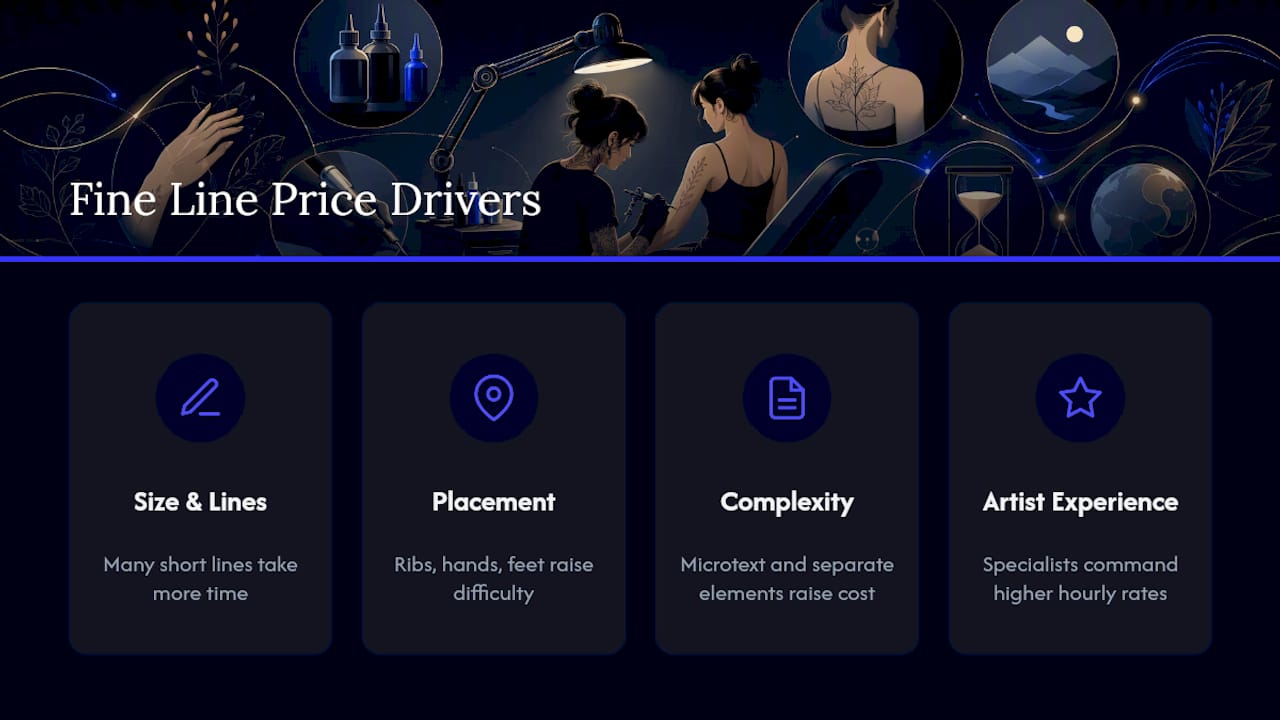
Size and line count matter more than most people expect. A tattoo with fifty short, separate lines takes longer than one continuous curved line of the same total length, because every stopping point means the artist has to reposition and re-steady their hand. Fine line work uses single-needle or small-needle configurations that move slowly by design. That precision is the entire point of the style, and it’s also why fine line rarely gets cheaper just because the final size is small.
Placement changes the difficulty math. Flat, stable skin like the outer forearm or thigh is the easiest surface to tattoo cleanly. Ribs, hands, and feet are a different story. These areas have thinner skin, more nerve endings, and constant movement or friction, which slows the artist down and increases the odds of a touch-up. Studio guides across the industry consistently flag ribs, hands, and feet as price drivers, and you should expect a placement surcharge or a longer session estimate if you’re set on one of those spots.
Complexity and microtext push the price up fast. Tiny script, especially in cursive or a language the artist doesn’t use daily, requires slower, more deliberate needlework than a bold symbol of the same size. The same goes for designs stacking multiple separate elements. Five small icons scattered across a forearm cost more than one icon five times their size, because each element needs its own setup, stencil check, and line work.
Artist experience and reputation set the baseline rate, and this is the factor most people underestimate. Fine line specialists can charge as much per hour as artists doing large-scale color work, because the technique demands slow, exact needle control that takes years to develop. Industry pricing guides note that style alone doesn’t determine cost; a specialist’s steady hand and portfolio of healed work justify rates that a newer artist can’t charge yet.
Pro Tip: If a quote seems unusually low for detailed fine line work, ask to see photos of healed pieces, not just fresh ones. Fresh fine line always looks crisp. Healed fine line reveals whether the artist’s linework actually holds up.
Shop Minimums, Flat Rates, and Hourly Pricing Explained
Fine line studios generally use one of three pricing structures, and knowing which one you’re being quoted makes it much easier to compare studios fairly.
Shop minimum. This is the lowest amount a studio will charge for any tattoo, no matter how small or quick. It covers setup, sterilization, and the artist’s time regardless of the design’s size.
Flat-piece quote. For a defined design at a set size and placement, many artists will quote one total price upfront. This is typical for small-to-medium fine line work where the scope is clear before the session starts, and it usually includes the tattoo itself plus a basic aftercare rundown, though not aftercare products.
Hourly billing. Larger or more open-ended fine line pieces, especially ones involving multiple elements or a session likely to run long, often get billed by the hour instead. Hourly rates for skilled tattoo artists commonly land in the $200 to $300 range, though this varies by region and artist demand.
Deposits factor into all three models. Most studios require a deposit to hold your appointment, and that amount is typically applied to your final bill rather than charged on top of it. Cancellation and rescheduling policies vary by shop, but a no-show or last-minute cancellation usually forfeits the deposit entirely, so confirm the policy before you book.
Budgeting Beyond the Tattoo Itself: The Full Checklist
The number on your quote isn’t your final out-the-door cost. A handful of predictable add-ons round out the real budget for a small fine line tattoo.
Deposit: usually $25 to $100, generally credited toward your final total rather than an extra charge.
Tip: the standard range is 15% to 25% of the total price, with 20% being the common default for solid work.
Aftercare products: fragrance-free healing balm and gentle unscented soap typically run $15 to $30 combined, and most artists will tell you exactly what to buy.
Touch-ups: many studios offer one free touch-up within a set window (often 30 to 60 days), but touch-ups requested after that window, or ones needed due to poor aftercare, may carry a separate charge, often at or near the shop minimum.
Sales tax: tattoo services are taxable in many states, so check whether your quote is pre-tax.
These norms hold across most studio pricing guides, though exact tipping culture and touch-up windows vary shop to shop.
Getting an Accurate Quote: What to Send and What to Ask
The fastest way to get a reliable, comparable quote is to give the artist everything they need before they ever pick up a pen. Send a clear reference photo, the exact size in inches (not “small” or “palm sized”), the specific placement, and, if you have sensitive or scar-prone skin, mention that upfront.
Once you’re talking with a shop or artist, these eight questions will tell you almost everything you need to know:
What is your shop minimum?
Will this piece be quoted flat or billed hourly?
How much is the deposit, and is it applied to the final price?
What’s your touch-up policy, and is there a time window?
Can I see healed photos of similar fine line work you’ve done?
How far out are you booking, and how long will the session take?
What sanitation and licensing standards does the shop follow?
Do you require anything specific before the appointment (skin prep, avoiding blood thinners, etc.)?
A red flag worth taking seriously: a quote that’s noticeably lower than everyone else’s for comparable work often signals inexperience with the fine line technique specifically. An artist charging well under local rates may produce lines that blur or fade faster, which costs more in touch-ups than paying a fair rate upfront. Reader-reported prices in city-specific forums back this up. Threads on small fine-line pricing in dense urban markets show ranges swinging from $200 to $700 for similar-looking work, driven almost entirely by artist reputation and city cost of living. Get two or three quotes before committing, and compare them by what’s included, not just the number on top.
How Long Fine Line Tattoos Last and What Protects Them
Fine line tattoos fade and blur faster than bold, thick-line styles, mainly because the ink sits in a thinner channel under the skin, giving it less room to hold its shape as skin cells turn over. Sun exposure accelerates that breakdown more than almost any other factor.
The first two weeks matter most. Gentle cleansing, a thin layer of recommended ointment, and avoiding soaking the area all protect the crispness of the linework while it heals. Long-term, daily high-SPF sunscreen is the single biggest factor in keeping fine lines sharp for years instead of months.
Placement on high-friction or high-sun areas (hands, feet, outer forearms) tends to fade fastest.
Oily or thicker skin can hold fine lines slightly better than very dry or sun-damaged skin.
Touch-ups commonly become worth considering around the two-to-five-year mark, typically priced near the shop minimum.
Diligent, consistent aftercare is one of the few variables entirely in your control, and it directly affects how much you’ll spend on touch-ups down the road.
Why the Cheapest Quote Usually Costs More Later
I’ve watched plenty of people chase the lowest number on a quote sheet, and it almost never works out the way they hoped. Fine line technique takes years to get genuinely steady, and an artist who’s rushing single-needle work to hit a lower price point is usually rushing the part that determines whether your tattoo still looks sharp in three years. Some studios prioritize showing healed photos to demonstrate quality rather than competing on the lowest quote.
— Kyle
Book Your Fine Line Tattoo With Soul Kraft Ink
Fine line pieces are built from scratch around each client’s idea, with no templates or repeated designs, so the artwork is original rather than using pre-made flash sheets. Fine line work can cover everything from single-word script to detailed botanical and portrait pieces, and pricing typically follows shop minimum and hourly structures.
To get an accurate quote, send us a clear reference photo, the size in inches, your desired placement, and any specific details you want included. Full pricing details, including our current shop minimum and hourly rates, are posted for anyone planning a budget before booking. If you’re ready to move forward, the fastest path is through our inquiry page, where you can submit your reference images and get a real quote back, deposit and shop minimum included, before you commit to a date.
Sources
FAQ
Are fine line tattoos more expensive than other styles?
Not inherently, but they’re rarely cheaper either. Fine line specialists often charge premium rates because the single-needle technique requires slow, precise work regardless of how small the final design looks.
How big is a $500 tattoo?
At $500, you’re typically looking at a medium fine line piece in the 2 to 5 inch range, such as a detailed botanical design or a multi-element piece combining script and small imagery. Simpler designs at that price point may also reflect a premium hourly rate from a highly sought artist rather than sheer size.
How long do fine line tattoos last?
Fine line tattoos can last many years, but they tend to soften and blur faster than bold, thick-line styles because the ink sits in a narrower channel under the skin. Consistent aftercare and daily sunscreen significantly extend how long the lines stay crisp.
How much is a fine line tattoo?
Most small fine line tattoos cost between $100 and $500, with tiny pieces typically landing at a studio’s shop minimum around $100 to $150. Soul Kraft Ink prices its fine line work using the same shop minimum and hourly structure common across the industry, with exact quotes based on your specific design and placement.
Recommended
Comments