
Tattooing Over Varicose Veins: Medical Clearance and Studio Rules
Tattooing directly over bulging varicose veins is not recommended and is considered contraindicated by most clinical and tattoo-safety guidance. The vein wall is thin, the blood pressure inside it is high, and puncturing it risks serious bleeding, infection, and a ruined tattoo. If your veins are bulging, painful, or discolored, your next step is a medical evaluation, not a booking.
TL;DR:
Tattooing over bulging varicose veins is strongly contraindicated because it increases risks of bleeding, infection, and poor ink retention due to the fragile, high-pressure vein walls.
The altered skin and tissue structure around varicose veins make consistent needle depth difficult, risking vein puncture and unpredictable healing.
Medical evaluation using duplex ultrasound is essential if you have symptoms or history of venous issues before considering tattooing to avoid complications.
Treating veins with sclerotherapy, ablation, or phlebectomy offers safer, more effective cosmetic results than tattooing over unresolved or untreated varicose veins.
Experienced tattoo artists will typically avoid placing ink directly over bulging veins and may recommend design relocation or techniques that minimize trauma to affected areas.
Table of Contents
What Are the Risks of Tattoo Over Varicose Veins?
Puncturing a varicose vein isn’t like nicking normal skin. These veins sit closer to the surface, carry higher pressure than healthy veins, and have walls that have already stretched and weakened. A tattoo needle working repeatedly over that tissue can open the vein wall enough to cause real bleeding, not just a bit of pinprick blood.
Clinical and tattoo-safety sources widely treat tattooing over bulging varicose veins as contraindicated because of the hemorrhage and infection risk. Beyond the immediate danger, the cosmetic outcome usually suffers too. Ink deposited into an area prone to bleeding tends to migrate, blur, or blowout under the skin, leaving patchy or muddy results instead of the crisp lines you paid for.
The most common complications include:
Bleeding and hematoma formation from a punctured vein wall
Elevated infection risk in skin already under vascular strain
Superficial thrombophlebitis, a painful clotting reaction in the vein after trauma
Poor ink retention, blowout, and patchiness as pigment disperses into damaged tissue
Hypertrophic or raised scarring that’s harder to predict on compromised skin
Statistic callout: There’s no single national percentage for how often artists refuse this placement, but the clinical consensus is consistent enough that most professional guidance treats raised varicosities as a hard stop, not a case-by-case judgment call.
How Varicose Veins Change Skin Structure and Tattoo Outcomes
Varicose veins don’t just sit under the skin, they change what the skin around them is made of. The subcutaneous tissue that normally cushions a needle’s depth gets thinner and less predictable as veins bulge and stretch nearby tissue.
That matters more than most people realize before their first session. An artist relies on consistent depth to lay ink evenly. Over a varicose vein, that consistency disappears.
Reduced padding makes needle depth control unreliable, increasing the odds of hitting the vein itself
Thinner, more fragile skin over affected veins heals slower and scars more visibly than skin elsewhere on the leg
Venous disease is progressive, meaning a vein that’s stable today can enlarge or shift position over the next several years
That last point is the one people miss. A tattoo placed carefully around a small varicosity now can end up distorted, stretched, or bisected by a vein that’s grown underneath it later. You’re not just tattooing the leg as it looks today. You’re tattooing a surface that keeps changing.
When Do You Need a Medical Evaluation Before Tattooing?
Certain signs mean you should see a clinician before an artist ever picks up a machine. Bulging veins, leg pain or heaviness, swelling, skin discoloration, a history of deep vein thrombosis, or current anticoagulant medication all warrant a checkup first.
Get screened for red flags. If you notice visible bulging, aching, swelling, skin texture changes, or you’re on blood thinners, book an appointment before scheduling ink.
Ask about duplex ultrasound. This imaging test is the standard tool vascular specialists use to check for venous reflux and clot risk, and it’s what determines whether a procedure like tattooing is safe to plan around.
See the right specialist. A phlebologist or vein specialist handles the vascular assessment; a dermatologist can weigh in on skin readiness; your primary care doctor can coordinate if you’re on anticoagulants.
Expect one of three outcomes. You’ll be cleared to proceed, advised to treat the vein first, or told to postpone until symptoms resolve.
What Are the Safer Alternatives to Tattooing Over Veins?
Treating the vein itself, rather than covering it, tends to produce a better result for both your health and how your leg eventually looks. Sclerotherapy injects a solution that collapses smaller varicose and spider veins. Endovenous ablation uses heat or laser energy to close off larger problem veins. Phlebectomy physically removes bulging veins through tiny incisions. Compression therapy, meanwhile, manages symptoms and can reduce vein prominence without any procedure at all.
Medical guidance generally favors this treatment first approach because it improves both function and cosmetic outcome rather than layering artwork over an unresolved problem.
Sclerotherapy: often used for smaller surface veins, with visible improvement over several weeks
Ablation: addresses larger veins feeding the visible bulge
Phlebectomy: removes larger clusters directly
Compression garments: manage symptoms and appearance without any downtime
Pro Tip: If you’ve had a vein procedure, don’t assume a healed-looking leg means you’re ready. Clinics commonly recommend six to twelve weeks of healing before elective skin trauma like tattooing, but always confirm timing with the clinician who treated you.
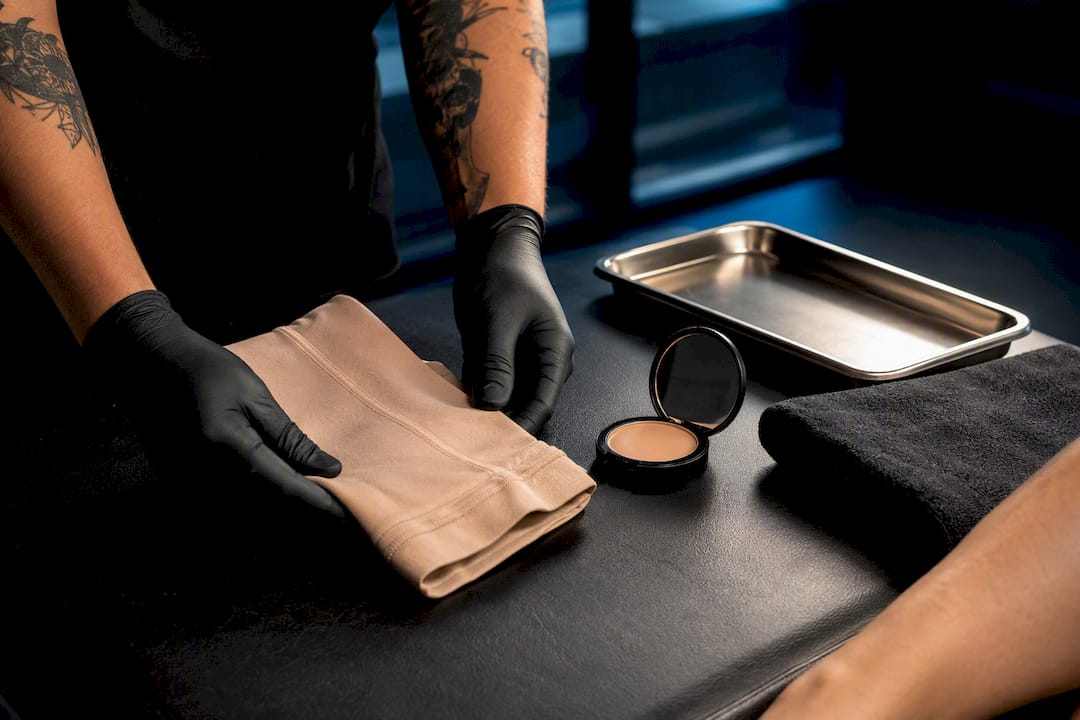
If you want to camouflage the area while you wait or decide, medical-grade compression garments and camouflage makeup made for scars and skin discoloration are safer short-term options than a needle.
How Do Tattoo Artists Handle Placements Near Varicose Veins?
Experienced artists treat vein-adjacent placements as a screening conversation, not just a design consult. Before anyone touches a machine, a responsible artist asks about medical history, current medications (especially blood thinners), and any history of clotting or vein treatment.
From there, technique adapts to the anatomy. Practitioner guidance on working near veins describes relocating the design entirely, switching to fine-line work with shallower needle depth, or breaking a larger piece into staged sessions that avoid repeated trauma to one area.
Ask about medications, clotting history, and prior vein procedures before booking
Consider relocating the design or using smaller needles and shallower technique near (not over) affected veins
Expect an artist to decline placement directly over raised varicosities and request medical clearance first
Watch for excess swelling, spreading redness, or a hematoma during aftercare, and treat those as reasons to call a doctor, not wait it out
Pro Tip: Bring your duplex ultrasound results or a clearance note to your consultation. It gives the artist real information to plan around instead of guessing.
This approach leans on the same safety-first screening before any custom piece goes near compromised skin.
Our Studio’s Approach to Clients With Varicose Veins
We start every consultation involving visible or symptomatic veins with a straightforward conversation: what’s been diagnosed, what treatment (if any) has happened, and whether we need documentation before moving forward. If a design sits near a questionable area, we’ll talk through relocating it or adjusting technique rather than pushing ahead. That conversation protects your skin and the final artwork.
— Kyle
Ready for a Safety-First Tattoo Consultation?
Once you’ve been cleared or treated, a professional tattoo studio is built for exactly this kind of careful, custom work. Every piece here is designed around your body, not pulled from a template, which matters even more when a design has to work around healed or treated skin rather than a flat, uncomplicated canvas.
Our artists specialize in fine-line work, black and gray realism, color realism, and cover-up or relocation design, all styles that lend themselves to adapting around vein-affected areas once you’re medically ready. Bring your duplex ultrasound results or written clearance to your consultation so we can plan placement and technique around your actual healing timeline, not guesswork. Sessions run $200 to $300 an hour or $1,200 to $2,000 for a full day, with a shop minimum of $150 to $200. If you’re ready to talk through a design that works with your skin rather than against it, request a consultation and we’ll go from there.
Sources
This guide draws on vascular and dermatology-focused clinical resources, including the NCBI overview of venous disease, PMC’s review of chronic venous disorder management, Healthline’s guidance on tattooing over veins, and Mayo Clinic’s overview of tattoo and piercing risks.
This article is general information, not a substitute for advice from a qualified doctor. Consult a qualified healthcare professional about your own circumstances before acting on anything here.
FAQ
What happens if you get a tattoo over a vein?
Puncturing a vein during tattooing can cause bleeding, bruising, or a hematoma under the skin, and it often disrupts how ink settles, leading to blowout or patchy pigment. Over a varicose vein specifically, the risk is higher because the vein wall is already thin and under greater pressure, which is why most clinical guidance treats this placement as unsafe.
Can you tattoo veiny legs?
It depends on what kind of veins you mean. Small, healthy visible veins are generally not a problem for an experienced artist, but bulging, raised varicose veins usually require medical clearance first, and many artists will decline or relocate the design rather than work directly over them.
What disqualifies you from getting a tattoo?
Active skin infections, certain blood clotting disorders, uncontrolled bleeding risk from anticoagulant medication, and unhealed venous procedures are common reasons an artist or clinician will advise against or postpone a tattoo. A recent duplex ultrasound or written medical clearance helps settle the question rather than guessing.
How do I hide my varicose veins?
Treating the underlying vein with sclerotherapy, ablation, or phlebectomy typically gives a better long-term cosmetic result than covering it with ink, since treating the vein first is the approach most clinical sources recommend. Compression garments and camouflage makeup are safe short-term options while you decide on treatment or wait out a healing window, and once you’re cleared, a custom relocation or cover-up design through a studio like Soul Kraft Ink is worth discussing.
Comments